
As the comforting aroma of slow-cooked beef fills the kitchen, my heart swells with anticipation. There’s something truly special about Korean Beef Noodles, a dish that perfectly captures the essence of home-cooked goodness. This hearty meal doesn’t just satiate hunger; it brings people together, making it an ideal choice for gatherings or cozy family dinners. Whether you’re a seasoned home chef or someone looking to escape the fast-food rut, this recipe is your ticket to culinary joy. With tender beef infused with aromatic spices and delicious noodles soaking up every drop of flavor, it’s the kind of comfort food that warms both body and soul. Ready to dive into a hearty, Asian-inspired delight that will have everyone asking for seconds? Let’s create a bowl of happiness with this Korean Beef Noodles recipe!
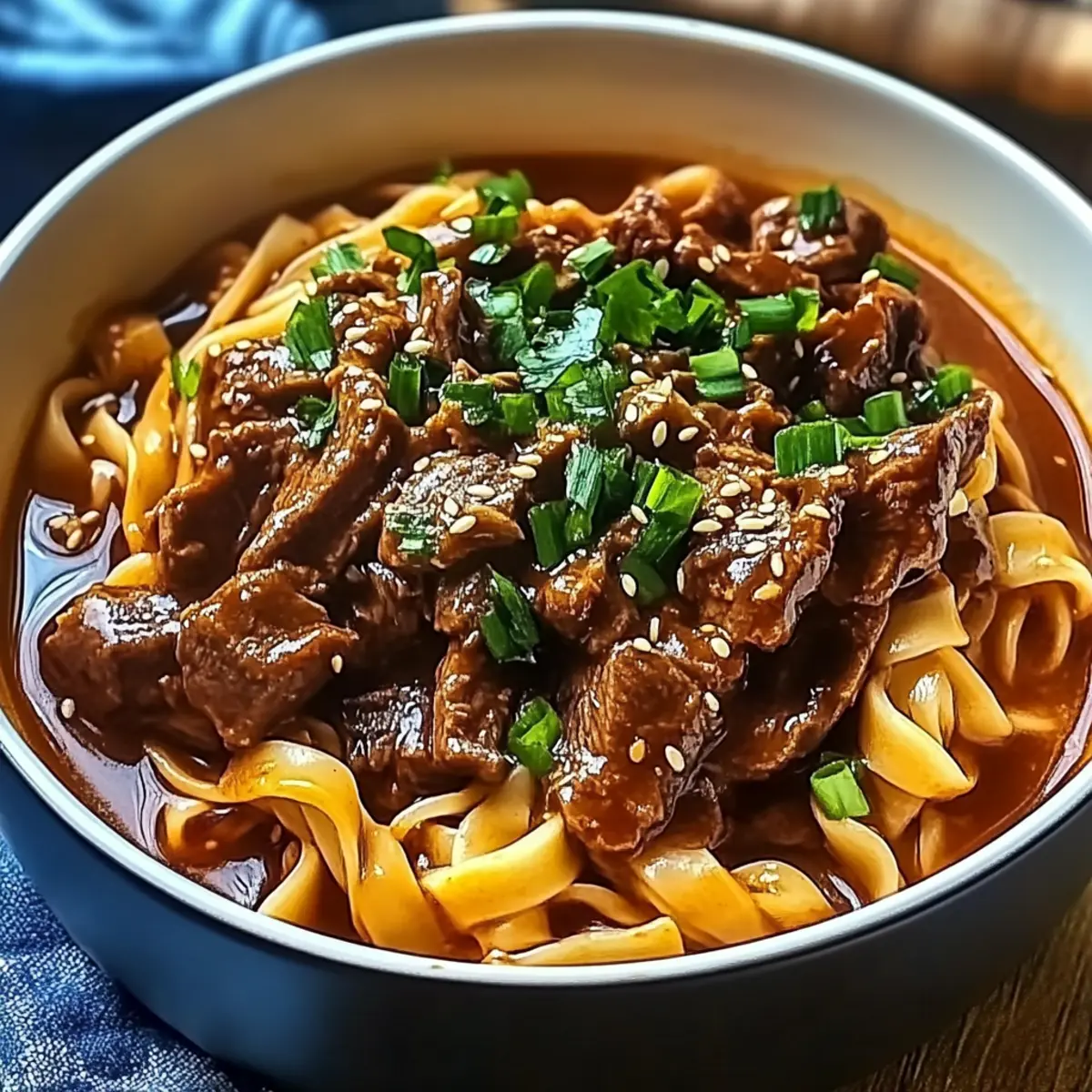
Why Are Korean Beef Noodles So Special?
Hearty Comfort: This dish is the ultimate warm hug in a bowl, perfect for those chilly evenings when you crave something soul-satisfying.
Slow-Cooked Perfection: With minimal effort required, you can enjoy tender beef that practically melts in your mouth, leaving you more time to savor the cozy ambiance with loved ones.
Flavorful Simplicity: The unique combination of gochujang, ginger, and garlic creates a flavor profile that dances on your taste buds, making every bite a delightful experience.
Versatile Options: Whether you want to lighten it up with chicken or add seasonal vegetables, this recipe allows for customization to suit your preferences or dietary needs.
Crowd-Pleaser: Ideal for gatherings, this dish is sure to impress guests and family alike, serving as a memorable centerpiece for any meal.
Elevate your culinary repertoire by pairing these noodles with a side of Korean BBQ Steak or a fresh salad for a balanced spread!
Korean Beef Noodles Ingredients
For the Beef
• Beef Chuck – This primary protein ensures a flavorful, tender base; brisket or round can also be used as alternatives.
• Black Pepper – Freshly ground enhances flavor; be generous for a beautiful seasoning.
For the Broth
• Beef Broth – Adds depth of flavor; substitute with vegetable broth for a lighter tasting version.
• Water – Used to dilute the broth to the right consistency; feel free to replace with extra beef broth if desired.
• Soy Sauce – Provides essential saltiness and umami; tamari makes a great gluten-free alternative.
• Brown Sugar – Balances the saltiness with sweetness; coconut sugar is an excellent substitute.
• Ginger – Fresh ginger adds warmth and spice; ground ginger works in a pinch but lacks potency.
• Garlic – Fresh cloves add incredible aroma; garlic powder can substitute if necessary (about 1/8 tsp per clove).
• Sesame Oil – Infuses a delicious nutty flavor into the dish; can be swapped for olive oil for a different twist.
• Gochujang – Offers heat and extraordinary complexity; sriracha is a great alternative for milder flavor.
For the Noodles
• Noodles (Udon or Ramen) – This base will make the dish hearty; use dried or fresh as per your preference.
For the Garnish
• Green Onions – Freshly sliced bring brightness; chives can serve as an alternative or omit if unavailable.
• Sesame Seeds – These optional toppings add crunch and flavor.
• Cilantro – Fresh cilantro offers a lovely garnish if you’re a fan of its bright taste.
Dive into this delightful bowl of Korean Beef Noodles, where tradition meets comfort and makes every bite a treasure!
Step‑by‑Step Instructions for Korean Beef Noodles
Step 1: Season the Beef
Begin by generously seasoning the beef chuck with freshly ground black pepper. This adds an essential depth of flavor to your Korean Beef Noodles. Use a clean cutting board and your hands to ensure the seasoning adheres well. This step will enhance the taste throughout the slow-cooking process, so make sure each piece is evenly coated.
Step 2: Prepare the Broth Mixture
In a large mixing bowl, combine the beef broth, soy sauce, brown sugar, freshly grated ginger, minced garlic, sesame oil, and gochujang. Whisk everything together until the brown sugar fully dissolves. This savory sauce will coat the beef beautifully once added to the slow cooker, providing that rich and comforting flavor characteristic of Korean Beef Noodles.
Step 3: Combine in the Slow Cooker
Transfer the seasoned beef chunks into your slow cooker. Pour the prepared sauce mixture over the beef, ensuring that every piece is submerged. This will create a flavorful base for the slow cooking. Set your slow cooker to low and cover it tightly, allowing the beef to simmer for 6 to 8 hours, until it becomes incredibly tender and easily shredded.
Step 4: Cook the Noodles
About 15-20 minutes before the beef is ready, cook your udon or ramen noodles according to the package instructions. Bring a pot of salted water to a boil and add the noodles, ensuring they are cooked al dente to maintain their texture in the dish. Once cooked, drain the noodles and set them aside briefly.
Step 5: Combine Noodles and Beef
Once the beef is tender, carefully remove the lid from the slow cooker. Add the cooked noodles directly into the pot with the beef and gently stir to combine. This allows the noodles to soak up the flavorful broth from the Korean Beef Noodles, ensuring every bite is saturated with savory goodness.
Step 6: Serve and Garnish
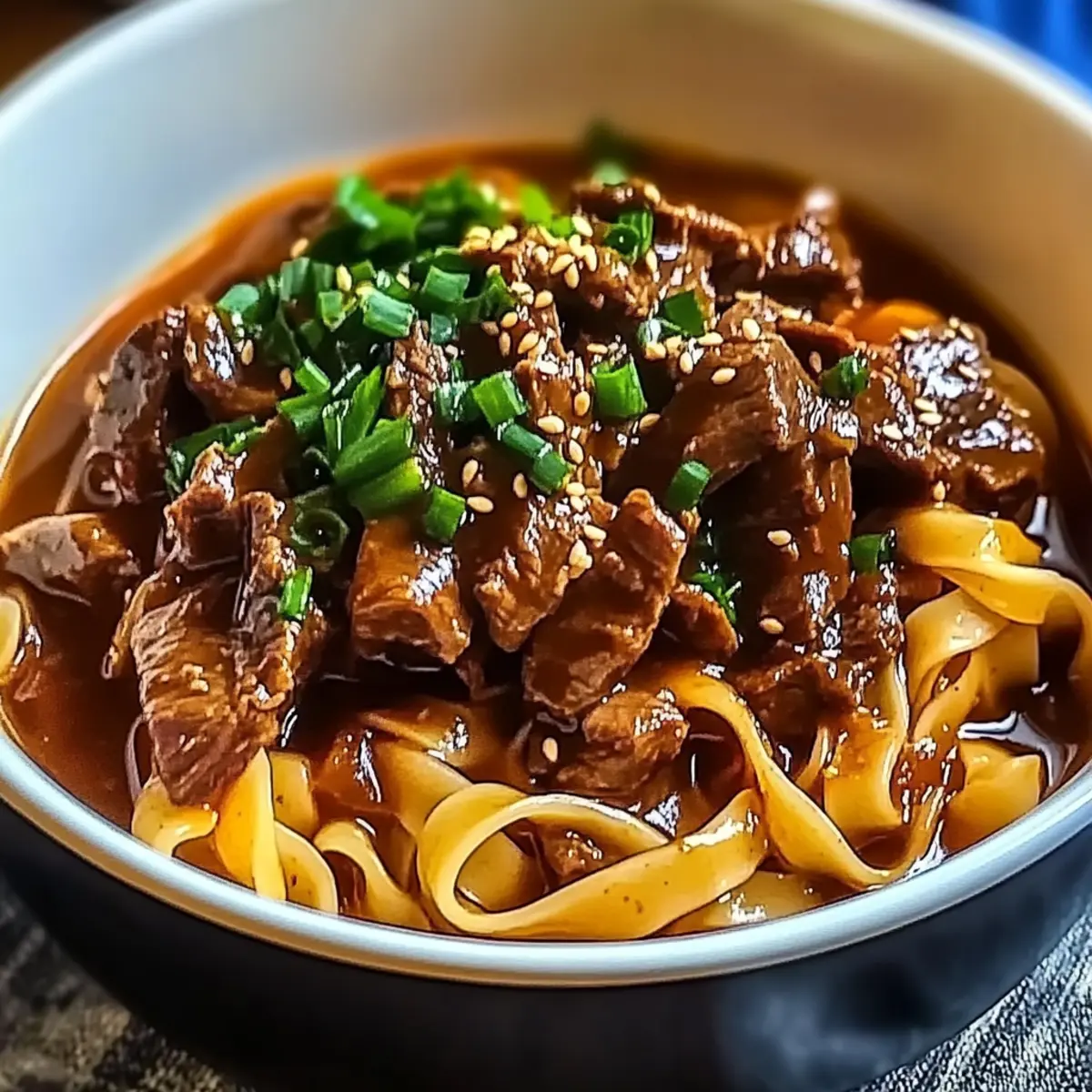
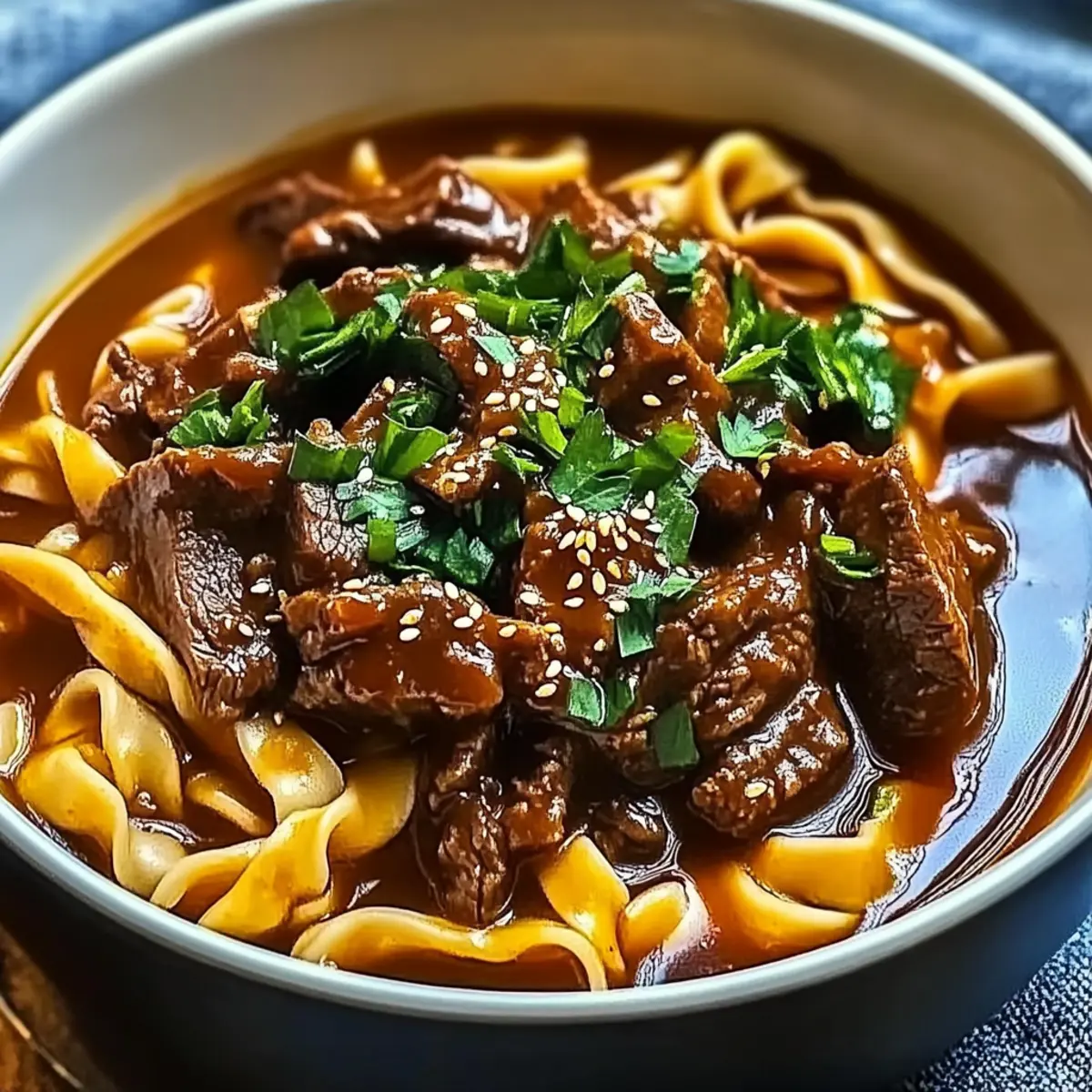
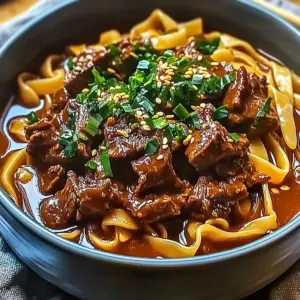
Ladle the hearty Korean Beef Noodles into bowls, and garnish each serving with sliced green onions, a sprinkle of sesame seeds, and fresh cilantro, if desired. The vibrant colors of the toppings enhance the dish, making it visually appealing. Serve warm and watch as everyone enjoys this comforting, delicious meal.
Expert Tips for Korean Beef Noodles
• Sear the Beef First: A quick sear enhances the flavors. Don’t skip this step as it locks in moisture and creates a lovely crust.
• Mind the Heat Level: Adjust the gochujang based on your preference for heat. Start with a small amount and taste before adding more for a spicier Korean Beef Noodles.
• Let It Rest: Allow your dish to rest for about 10 minutes before serving. This helps the flavors meld beautifully and improves texture.
• Don’t Overcook the Noodles: Follow package instructions carefully; you want them al dente. Overcooking will lead to mushy noodles in your Korean Beef Noodles.
• Customization is Key: Feel free to throw in seasonal vegetables like bok choy or mushrooms; they add both nutrition and color, enhancing your hearty dish.
Korean Beef Noodles Variations & Substitutions
Feel free to play around with this recipe to suit your tastes and dietary needs—let your creativity shine!
- Chicken Thighs: Substitute beef with chicken thighs for a lighter, flavorful protein option that still remains tender.
- Seasonal Veggies: Add in vegetables like bok choy or mushrooms during the last hour of cooking for a nutritious twist that enhances the dish.
- Gluten-Free Noodles: Swap out traditional noodles for gluten-free options, like rice noodles or shirataki noodles, for a deliciously low-carb meal.
- Add Heat: Spice things up by incorporating fresh chili peppers or a dash of chili flakes for a tantalizing kick that elevates the flavor.
- Coconut Milk: For a creamy richness, replace a part of the beef broth with coconut milk, lending a delightful tropical note to your noodles.
- Different Broth: Experiment with vegetable broth instead of beef for a lighter version that still brims with flavor, perfect for veggie lovers.
- Soy Sauce Alternatives: If you’re watching your sodium intake, try a low-sodium soy sauce or coconut aminos for a healthier option.
- Flavor Infusion: For extra flavor, marinate the beef in a mixture of soy sauce, ginger, and garlic a few hours before cooking to deepen the taste profile.
As you make these substitutions, consider adding a side of Slow Cooker Beef Brisket to complete your comforting meal, or serve with a fresh salad alongside these delightful noodles. Enjoy the process of crafting a dish that’s uniquely yours!
What to Serve with Korean Beef Noodles
Elevate your dining experience with these delightful side pairings that complement the rich flavors of your dish.
-
Kimchi: This tangy, fermented side offers a crunchy, spicy contrast that enhances the savory richness of the noodles. Plus, it’s a fantastic probiotic boost!
-
Fresh Cucumber Salad: Light and refreshing, this salad adds a crisp texture and vibrant colors to your meal. The coolness of cucumber balances the hearty beef beautifully.
-
Steamed Bok Choy: Sweet and tender, bok choy brings a burst of color and nutrients, making your Korean Beef Noodles feel even more wholesome and satisfying.
-
Egg Drop Soup: This comforting, savory soup introduces a warm and silky texture, making it a delightful precursor to your main dish.
-
Sesame Garlic Bread: A warm, crusty bread infused with sesame and garlic is perfect for soaking up flavorful broth from your Korean Beef Noodles, adding a satisfying element to your meal.
-
Jasmine Rice: Light and fragrant, this rice serves as a wonderful canvas for savoring the beef and broth. It simplifies the dish while allowing the bold flavors to shine.
-
Crystal Light Cocktails: A refreshing drink that provides a light citrus zing, perfectly balancing the richness of the noodles. It elevates the dining experience with a bit of bubbly flair!
Mix and match these options to create a well-rounded, memorable meal that celebrates the comforting essence of Korean Beef Noodles!
How to Store and Freeze Korean Beef Noodles
Fridge: Store leftovers in an airtight container for up to 3 days. Gently reheat on the stove, adding a splash of beef broth to moisten the noodles.
Freezer: Freeze Korean Beef Noodles for up to a month. Let the dish cool completely before transferring to freezer-safe containers. Thaw in the fridge overnight before reheating.
Reheating: When reheating from the fridge, warm it slowly on the stove over low heat, stirring occasionally to ensure even warming and prevent the noodles from sticking.
Wrapping: If making ahead, consider storing the noodles and beef separately to maintain texture, especially if you’ll be freezing them.
Make Ahead Options
These Korean Beef Noodles are perfect for meal prep enthusiasts! You can season the beef and prepare the broth mixture up to 24 hours in advance, storing them separately in airtight containers in the refrigerator to preserve freshness. To maintain flavor and texture, keep the cooked noodles separate until just before serving. On the day you wish to enjoy your hearty dish, simply combine the prepped beef and broth in the slow cooker, cooking on low for 6-8 hours or high for 3-4 hours. When everything is ready, cook your noodles according to the package instructions, then mix them in and serve for just as delicious a meal as if prepared fresh, saving you valuable time on busy weeknights!
Korean Beef Noodles Recipe FAQs
How do I choose the best beef for Korean Beef Noodles?
Absolutely! For the most flavorful results, I recommend using beef chuck, as it provides tenderness while slow-cooking. If you can’t find chuck, brisket or round cuts work well too. Look for meat that has a good amount of marbling; this fat will render down during cooking, keeping the beef juicy and flavorful.
What is the best way to store leftovers from Korean Beef Noodles?
Store any leftovers in an airtight container in the refrigerator for up to 3 days. When reheating, you can add a splash of beef broth or a little water to keep the noodles from drying out. Simply warm it on the stove over low heat, stirring gently for even warming.
Can I freeze Korean Beef Noodles, and if so, how?
Yes, you can freeze this dish! Allow the Korean Beef Noodles to cool completely before transferring them to freezer-safe containers. They can be frozen for up to a month. Thaw in the fridge overnight, then reheat gently on the stove while stirring occasionally to restore that delicious, savory broth.
What should I do if my beef isn’t tender after cooking?
Very! If your beef isn’t tender after cooking, it might need more time in the slow cooker. Sometimes, slow cookers can vary in temperature, so if it’s not done, simply cover it again and continue cooking on low for an additional hour or two. Make sure to check periodically – you want it to be fall-apart tender and infused with that amazing flavor.
Are there any dietary considerations I should keep in mind?
Of course! If you’re cooking for someone with dietary restrictions, you can easily adapt this recipe. To make it gluten-free, use tamari instead of soy sauce and ensure your noodles are gluten-free. Additionally, feel free to use coconut sugar as a substitute for brown sugar to keep it refined sugar-free. If you have a pet, keep in mind that ingredients like garlic can be harmful to them, so be cautious about leftovers around curious paws.
How do I ensure my noodles are cooked perfectly?
To achieve the ideal texture, cook the noodles according to the package instructions only during the last 15-20 minutes of the beef’s cooking time. This ensures they remain al dente and absorb the delicious broth without becoming mushy. Check them a minute or two before the suggested time to avoid overcooking.
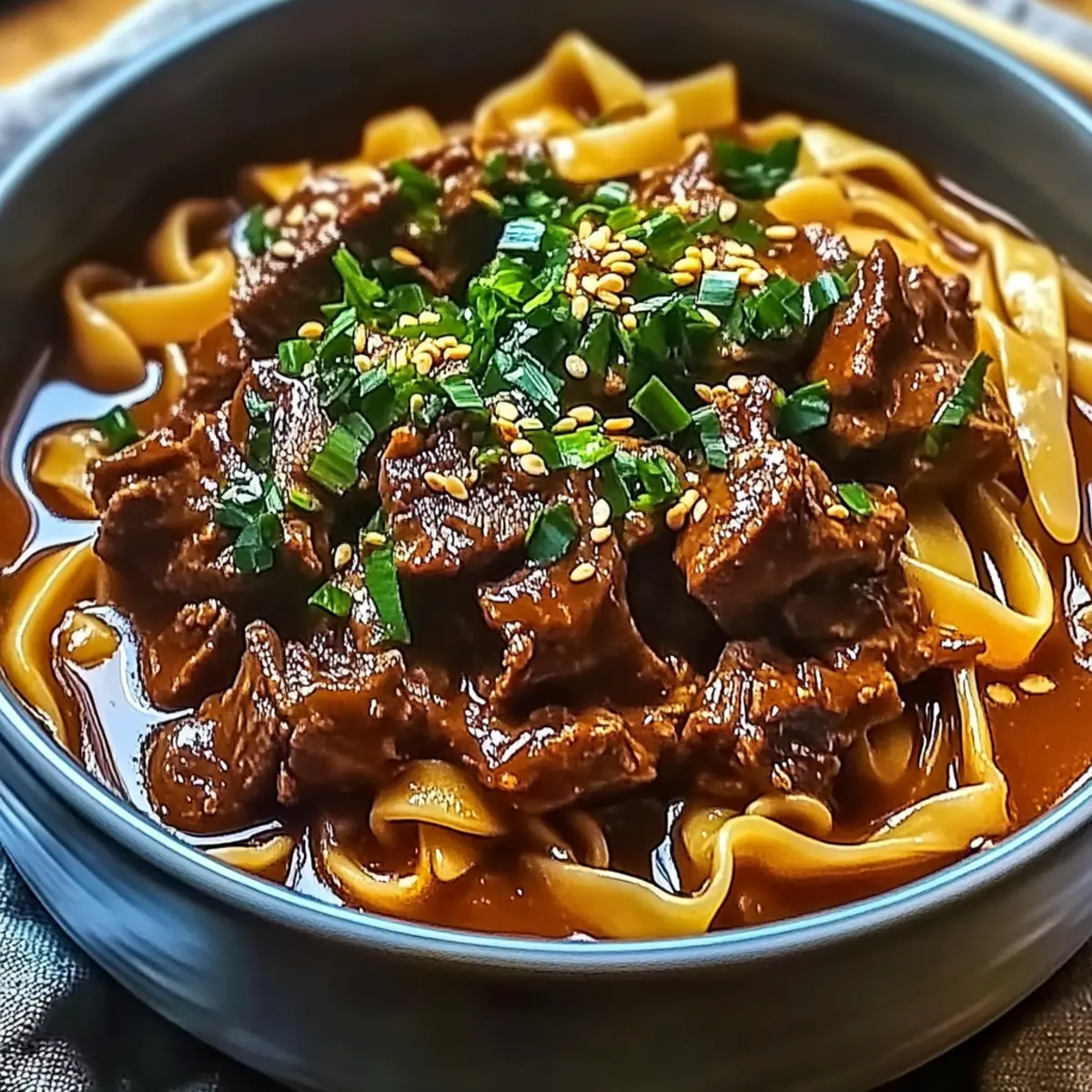
Heavenly Korean Beef Noodles for Cozy Nights In
Ingredients
Equipment
Method
- Begin by generously seasoning the beef chuck with freshly ground black pepper.
- Combine the beef broth, soy sauce, brown sugar, grated ginger, minced garlic, sesame oil, and gochujang.
- Transfer the seasoned beef chunks into your slow cooker and pour the sauce mixture over the beef.
- Cook your udon or ramen noodles according to the package instructions.
- After cooking the beef, add the cooked noodles into the pot and gently stir to combine.
- Ladle the noodles into bowls and garnish with green onions, sesame seeds, and cilantro.
Leave a Reply