
As the warm scent of freshly baked bread envelops your kitchen, it’s hard to resist the allure of a homemade baguette. This classic baguette recipe is not just about the delightful crust that crackles under your fingers; it’s a simple, rewarding way to elevate any meal. Whether you’re crafting sandwiches filled with your favorite ingredients or pairing warm slices with a comforting soup, these baguettes are incredibly versatile. Plus, the satisfaction of creating bakery-quality bread in your own home makes every bite feel special. Ready to bring the taste of France to your table today? Let’s dive into this baking adventure!
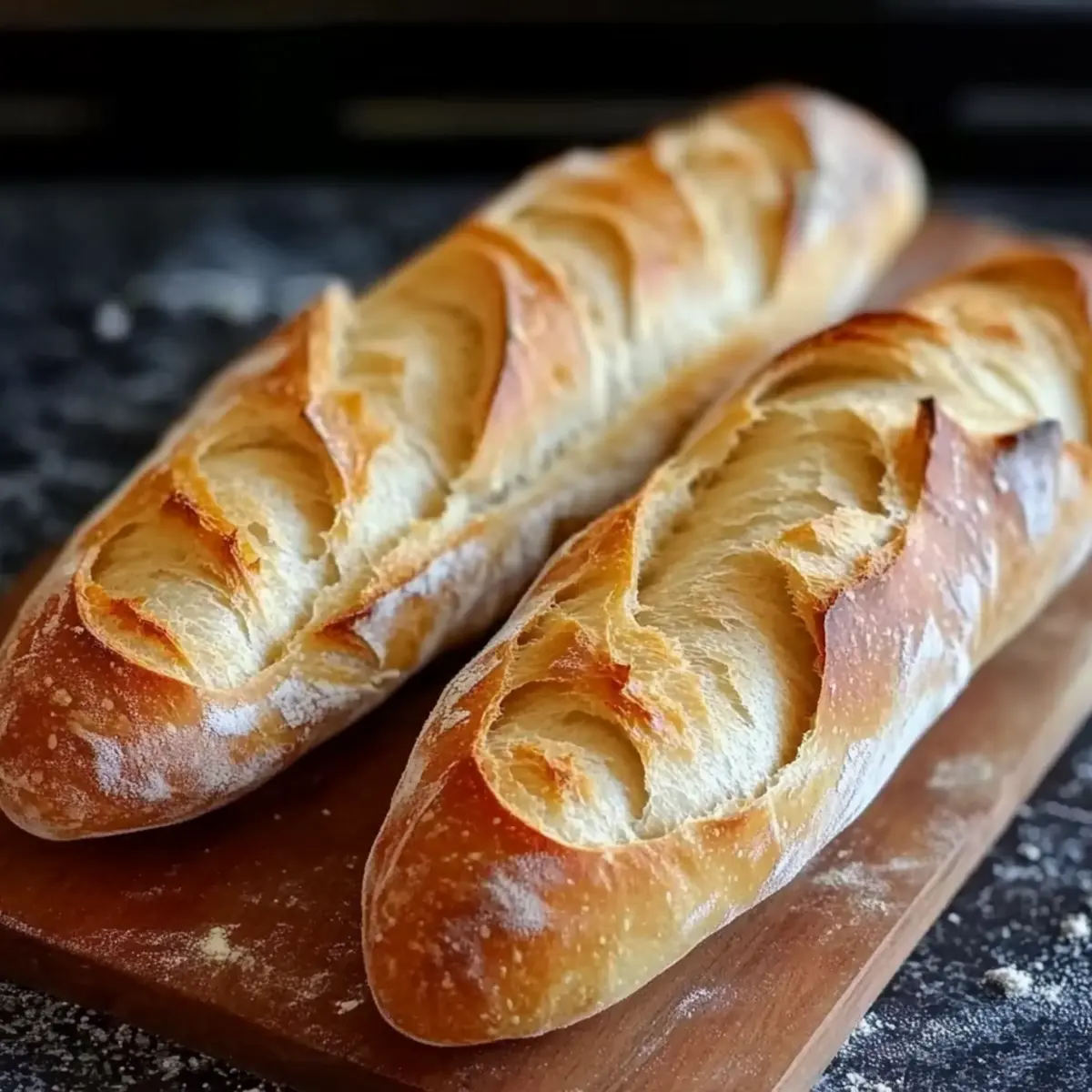
Why is Homemade Baguette Special?
Irresistible Aroma: There’s nothing quite like the warm scent of freshly baked baguettes filling your kitchen.
Simple Process: You don’t need to be a pro baker; this recipe is straightforward and perfect for anyone eager to try their hand at bread-making.
Versatile Delight: Serve them warm with butter, turn them into scrumptious sandwiches, or pair with your favorite soup; these baguettes are perfect for every occasion.
Artisanal Quality: Enjoy bakery-quality results right at home, offering a unique touch to your meals that store-bought bread just can’t match.
Time-Saving Tip: These baguettes can be made ahead and stored in the freezer, making them a convenient option for busy weeknights. You can even explore variations by adding herbs or cheese for an exciting twist!
Baguette Ingredients
For the Dough
• Bread Flour or All-Purpose Flour – Provides structure and texture; bread flour yields chewier baguettes, but all-purpose flour is an acceptable substitute.
• Lukewarm Water (about 110°F/43°C) – Activates the yeast and hydrates the dough; use a thermometer for accuracy to perfect your homemade baguette.
• Active Dry Yeast (2 ¼ teaspoons or 1 packet) – The leavening agent that makes the dough rise; instant yeast can be used without activation for convenience.
• Salt (1 ½ teaspoons) – Enhances flavor and strengthens gluten structure; do not omit, as it’s essential for taste and texture.
• Sugar (1 teaspoon) – Aids yeast activation and adds a hint of sweetness; can be reduced for less sweetness if desired.
For the Egg Wash
• Egg White (1, beaten) – Provides a shiny crust that makes your baguette look irresistible; optional, but recommended for improved appearance.
• Water (1 tablespoon) – Thins the egg white for even application; ensures a smooth finish on your homemade baguette.
Step‑by‑Step Instructions for Classic Homemade Baguettes
Step 1: Activate the Yeast
In a small bowl, combine 1 cup of lukewarm water (about 110°F/43°C), 2 ¼ teaspoons of active dry yeast, and 1 teaspoon of sugar. Stir gently to dissolve and let sit for 5-10 minutes. You’re looking for a frothy, bubbly mixture that signals that your yeast is alive and ready to work its magic for your baguette dough.
Step 2: Make the Dough
In a large mixing bowl or the bowl of a stand mixer, whisk together 3 ½ cups of bread flour and 1 ½ teaspoons of salt. Carefully pour in your activated yeast mixture and mix until you form a shaggy dough. Turn it out onto a floured surface or continue in the mixer with a dough hook. Knead for 8-10 minutes until the dough is smooth and elastic, essential for getting that delightful chewy texture.
Step 3: First Rise
Shape your dough into a ball and place it in a lightly oiled bowl, turning it to coat. Cover the bowl with a damp cloth or plastic wrap. Now, let it rise in a warm place for 1 to 1.5 hours, or until the dough has doubled in size. Look for a puffy, airy dough that bounces back slowly when lightly pressed.
Step 4: Shape the Baguettes
Once risen, punch down the dough to release the air, then transfer it to a floured surface. Divide the dough into two equal pieces and gently shape each into a rectangle. Fold the sides toward the center, seal the seams, and stretch them into long baguette shapes (about 12-14 inches). Place each baguette onto a parchment-lined baking sheet, ensuring they have plenty of space to rise.
Step 5: Second Rise
Cover the shaped baguettes with a kitchen towel and allow them to rise for 30-45 minutes. Keep an eye on them as they puff up nicely. You want them to look noticeably larger and more rounded, indicating they’re ready for the oven and that your homemade baguettes are coming to life.
Step 6: Preheat Oven
About 20 minutes before baking, preheat your oven to 450°F (230°C). Place a shallow pan on the bottom rack to create steam during baking, which is crucial for achieving that perfect crust. While the oven heats, prepare your egg wash by beating one egg white with 1 tablespoon of water until combined, ready to give your baguettes a beautiful shiny finish.
Step 7: Score and Bake
Once your baguettes have risen, make 3-4 diagonal slashes on top of each using a sharp knife or a razor blade to allow steam to escape while baking. Brush the baguettes with your egg wash for that lovely golden hue. Carefully pour hot water into the shallow pan in the oven to create steam, then place the baguettes on the middle rack and bake for 20-25 minutes until they’re golden brown and sound hollow when tapped on the bottom.
Step 8: Cool & Serve
After baking, remove the baguettes from the oven and let them cool on a wire rack for 10-15 minutes. This cooling period helps set the crust and makes slicing easier. Once ready, slice into your fresh baguettes, savor their crisp exterior and soft interior, and revel in the joy of your homemade baguette experience!
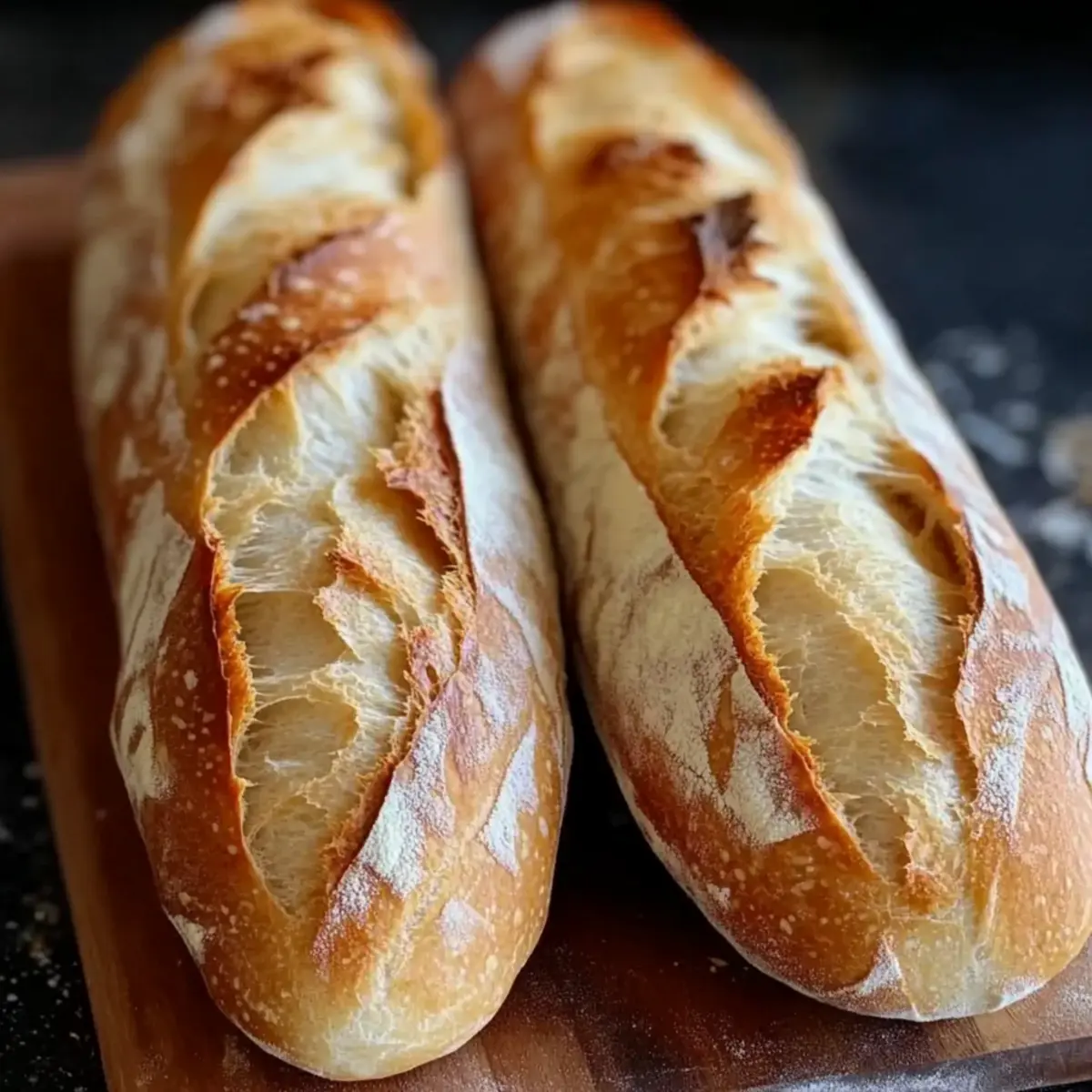
Baguette Variations & Substitutions
Feel free to explore these tempting variations that will elevate your homemade baguette experience!
-
Whole Wheat: Swap in whole wheat flour for a nuttier flavor and added nutrition. This twist will give your baguette a heartier texture that’s just as delicious.
-
Cheesy Delight: Add shredded cheese, like cheddar or Gruyère, directly into the dough. It imparts a rich, savory flavor that pairs wonderfully with soups or salads.
-
Herb-Infused: Mix in finely chopped herbs, such as rosemary or thyme, for added flavor. The aroma while baking will transform your kitchen into a fragrant bakery.
-
Sweet Touch: Replace sugar with honey or malt syrup. This not only sweetens but also gives your baguette a lovely golden color and a hint of caramel flavor.
-
Spicy Kick: Include a pinch of cayenne pepper or crushed red pepper flakes for a warm, spicy surprise. Just a hint of heat can elevate your baguette to a new level!
-
Garlic Lover’s: Incorporate minced fresh garlic into the dough. The garlic aroma while baking creates a truly irresistible loaf that begs to be paired with olive oil or butter.
-
Seasoned Crust: Before baking, sprinkle your shaped baguettes with sea salt or sesame seeds for an extra crunch and flavor enhancement.
-
Seed Topping: Top your baguettes with a mixture of sesame seeds or poppy seeds for a delightful texture and appearance. It’s a simple way to make your bread look artisan!
To enhance your homemade baguette journey, consider pairing your creations with some delicious spreads or serving it alongside a comforting soup like a classic tomato basil. Each variation invites a unique flavor experience, perfect for exploring different culinary adventures!
What to Serve with Classic Homemade Baguettes
There’s nothing like the comforting aroma of freshly baked bread to create the perfect meal. Let’s explore delectable pairings that will elevate your homemade baguette experience!
-
Creamy Tomato Soup: This classic pairing warms the soul and enhances the baguette’s crusty texture. Imagine dipping a warm slice into the savory, velvety soup; it’s pure bliss!
-
Herbed Butter: A simple yet indulgent spread, herbed butter adds a burst of flavor and richness. You can whip up your favorite herbs to create a personalized touch that complements the baguette beautifully.
-
Crispy Salad: A light, refreshing salad with greens, cherry tomatoes, and a tangy vinaigrette perfectly balances the hearty bread. The crispness of the veggies contrasts wonderfully with the soft interior of the baguette.
-
Cheese Platter: Select a variety of your favorite cheeses alongside fresh fruit and charcuterie. This elegant spread allows guests to create customized bites, all enhanced by the baguette’s fluffy texture.
-
Savory Stews: Pair your baguette with a hearty beef or vegetable stew for a comforting meal. The bread is perfect for soaking up luscious sauces, turning every bite into a feast of flavors.
-
Red Wine: A rich, full-bodied red wine complements the earthy notes of the baguette and any of its savory pairings beautifully. Savoring both together can elevate your home dining experience to a cozy bistro vibe.
-
Chocolate Mousse: For dessert, a light and airy chocolate mousse offers a delightful contrast to the baguette’s crust. The combination of rich chocolate and buttery bread creates an indulgent ending to your meal.
Each of these pairings adds depth and satisfaction to your table, ensuring that your Classic Homemade Baguettes shine at every occasion!
Expert Tips for Homemade Baguette
- Flour Choice: Use bread flour for a chewier texture and better rise; all-purpose flour works too, but results may vary.
- Temperature Matters: Ensure your water is lukewarm; too hot can kill the yeast, leading to flat baguettes.
- Steam for Crispiness: Add hot water to the shallow pan during baking to create steam, achieving that coveted crispy crust.
- Knead Well: Knead the dough thoroughly for 8-10 minutes; this develops gluten essential for airy homemade baguette texture.
- Watch Your Rises: Don’t rush the rising times; a well-risen dough is key to lighter baguettes, so let it double in size.
- Freezing Tip: For best results, freeze cooled baguettes tightly wrapped; they can last up to a month for future enjoyment.
Storage Tips for Baguette
Room Temperature: Store your baguette at room temperature in a paper bag for up to 2 days. Avoid plastic to maintain its crispy crust.
Fridge: While not recommended, if you must, wrap the baguette in a damp cloth and place it in a plastic bag. It can last up to 3 days but will lose its crunch.
Freezer: Wrap cooled baguettes tightly in plastic wrap or aluminum foil and freeze for up to 1 month. Thaw at room temperature before reheating for optimal freshness.
Reheating: To revive your baguette’s crust, preheat your oven to 375°F (190°C) and bake for about 5-10 minutes. Enjoy the delightful crispiness of your homemade baguette!
Make Ahead Options
These classic homemade baguettes are a fantastic option for busy weeknights and meal prep enthusiasts! You can prepare the dough up to 24 hours in advance; simply follow Steps 1 through 3 for the initial rise, then cover the bowl tightly with plastic wrap and refrigerate. When ready to bake, bring the dough back to room temperature for about 30 minutes before shaping (Steps 4 and 5). For even longer storage, shape and freeze the unbaked baguettes for up to a month; once thawed and risen, bake them straight from the fridge or at room temperature. By making your baguettes ahead of time, you’ll enjoy freshly baked bread with minimal effort, perfect for sandwiches or accompanying your favorite meals!
Baguette Recipe FAQs
How do I choose the right flour for my baguette?
Absolutely! For a classic baguette, I highly recommend using bread flour to achieve that chewy texture. However, if you only have all-purpose flour on hand, don’t worry—it’s a fine substitute and will still yield delicious results.
How should I store my baguettes once baked?
To keep your baguettes fresh, store them at room temperature in a paper bag for up to 2 days. Avoid using plastic as it traps moisture and can make the crust soggy. If you need to keep them longer, wrap cooled baguettes tightly in plastic wrap or aluminum foil and freeze them for up to 1 month.
Can I freeze my homemade baguettes?
Yes, you can! Just let them cool completely after baking, then wrap them tightly in plastic wrap or aluminum foil. For an extra layer, you can place them in a freezer bag. When you’re ready to enjoy them, thaw at room temperature and reheat in a preheated oven at 375°F (190°C) for about 5-10 minutes to restore their lovely crust.
What should I do if my dough doesn’t rise?
If your dough doesn’t rise as expected, it could be due to inactive yeast. Be sure to use lukewarm water (around 110°F/43°C) as hot water can kill the yeast. If your yeast doesn’t froth after being mixed with water and sugar for 5-10 minutes, it’s likely expired and needs to be replaced. Start with fresh yeast for better results next time.
Are homemade baguettes suitable for people with allergies?
Very good question! This baguette recipe contains wheat, gluten, and eggs, so it may not be suitable for individuals with gluten intolerance or egg allergies. However, you can experiment by using gluten-free flour blends available in stores and replace the egg wash with a plant-based alternative if you want to get creative in gluten-free baking!
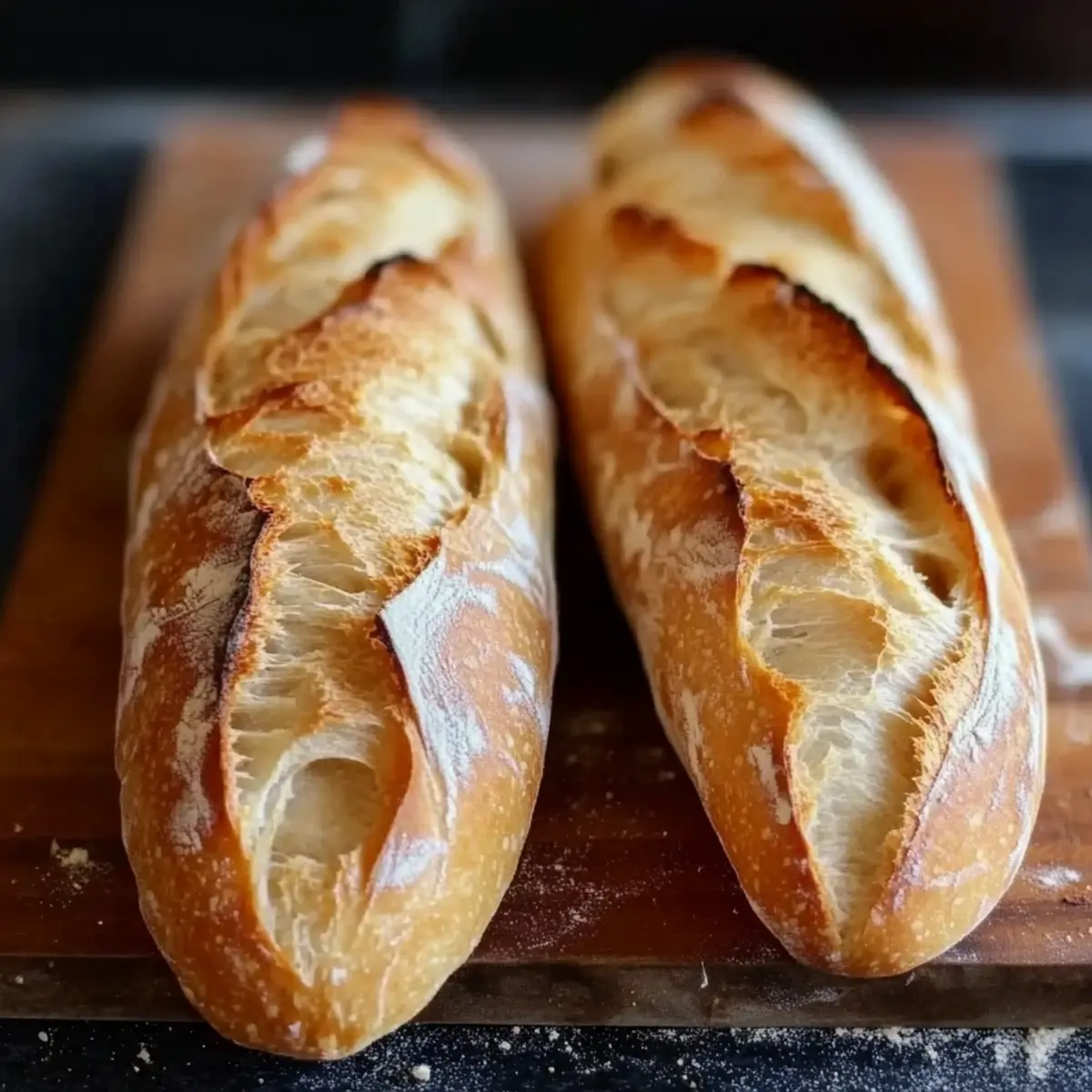
Homemade Baguette Recipe for Irresistible Freshness
Ingredients
Equipment
Method
- In a small bowl, combine lukewarm water, active dry yeast, and sugar. Stir gently to dissolve and let sit for 5-10 minutes until frothy.
- In a large mixing bowl, whisk together bread flour and salt. Pour in the activated yeast mixture and mix until a shaggy dough forms. Knead for 8-10 minutes until smooth and elastic.
- Shape the dough into a ball and place it in a lightly oiled bowl. Cover with a damp cloth and let rise in a warm place for 1 to 1.5 hours until doubled in size.
- Punch down the dough and transfer to a floured surface. Divide into two pieces and shape each into long baguette shapes. Place on a parchment-lined baking sheet.
- Cover shaped baguettes with a kitchen towel and allow to rise for 30-45 minutes until noticeably larger.
- Preheat the oven to 450°F (230°C), placing a shallow pan on the bottom rack. Prepare egg wash by beating egg white with water.
- Make 3-4 diagonal slashes on top of each baguette and brush with egg wash. Pour hot water into the shallow pan and bake for 20-25 minutes until golden brown.
- Remove from the oven and cool on a wire rack for 10-15 minutes before slicing and serving.
Leave a Reply